10 Fun STEAM Stories That Spark Interest in Science
# 10 Fun STEAM Stories That Spark Interest in Science In today's rapidly evolving world, science, technology, engineering, arts, and mathematics (STEAM) play a critical role in shaping our future inn
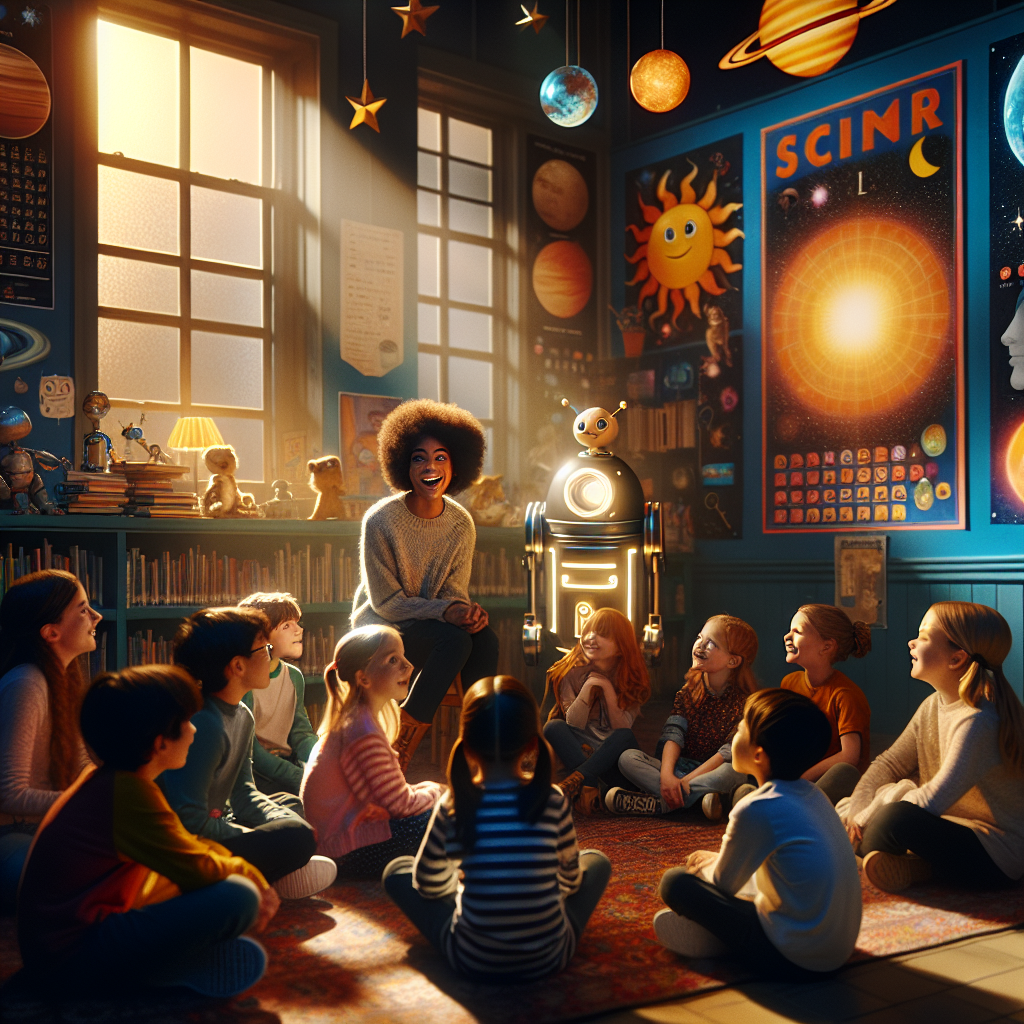
In today's rapidly evolving world, science, technology, engineering, arts, and mathematics (STEAM) play a critical role in shaping our future innovators. Introducing children to STEAM concepts through captivating stories not only fuels their imagination but also lays the foundation for a lifelong interest in science and technology. For parents and educators seeking engaging resources, stories that teach science are a wonderful way to blend education with entertainment.
Through the art of storytelling, children can explore complex scientific ideas in a way that's relatable and understandable. This approach not only makes learning fun but also encourages creative thinking and problem-solving skills. In this article, we will explore ten delightful STEAM stories that are perfect for children aged 6-12, each designed to spark curiosity and foster a love for learning.
1. "Ada Twist, Scientist" by Andrea Beaty
A Tale of Curiosity
"Ada Twist, Scientist" is a delightful narrative that follows the curious young Ada, who is constantly asking questions about the world around her. Her insatiable curiosity and determination to find answers make her a wonderful role model for children.
Encouraging Inquiry-Based Learning
This story emphasizes the importance of asking questions and seeking answers, which are fundamental components of scientific inquiry. Parents and educators can use Ada's adventures to inspire children to explore their own questions and conduct simple experiments at home or in the classroom.

2. "The Most Magnificent Thing" by Ashley Spires
Engineering and Creativity
In "The Most Magnificent Thing," a little girl sets out to create something extraordinary. Despite numerous setbacks, she remains determined to succeed, illustrating the engineering design process of planning, creating, testing, and improving.
Promoting Perseverance
This story teaches children about resilience and the value of persistence in problem-solving. Encourage children to identify a problem they want to solve and brainstorm their own "magnificent thing," fostering both creative expression and engineering skills.
3. "Rosie Revere, Engineer" by Andrea Beaty
Dream Big and Innovate
Rosie Revere's story is one of innovation and creativity. As a young inventor, Rosie encounters failure but learns that each flop is a step closer to success. Her story is an excellent introduction to engineering and the iterative process of design.
Integrating Art with Science
Rosie's journey also highlights the intersection of arts and engineering, showcasing how creativity enhances scientific endeavors. This integration aligns with the core principles of STEAM education, encouraging children to see the connections between disciplines.
4. "Star Stuff: Carl Sagan and the Mysteries of the Cosmos" by Stephanie Roth Sisson
Exploring the Cosmos
This biography introduces children to the life of Carl Sagan, one of the most renowned astronomers. Through Sagan's story, children can explore the vastness of space and the wonders of the cosmos.
Inspiring a Sense of Wonder
"Star Stuff" is perfect for sparking a child's interest in astronomy and encouraging them to look up at the stars with curiosity and wonder. It also offers a gateway to discussing topics such as planets, stars, and the universe.
5. "If I Built a Car" by Chris Van Dusen
Imaginative Engineering
In "If I Built a Car," young Jack imagines a fantastical car with features beyond the ordinary. This story is an excellent platform for discussing mechanical engineering and the creative process of designing new inventions.
Encouraging Imagination
Use Jack's imaginative car as a springboard for children to design their own vehicles, incorporating elements of physics and design. This activity combines storytelling with practical science and engineering challenges.
6. "The Boy Who Harnessed the Wind" by William Kamkwamba and Bryan Mealer
Real-Life Innovation
Based on a true story, this book tells the inspiring tale of William Kamkwamba, a young boy from Malawi who builds a windmill to bring electricity to his village. It's a powerful narrative about innovation, resourcefulness, and the impact of technology in improving lives.
Discussing Renewable Energy
This story serves as an excellent introduction to renewable energy sources and the importance of sustainable solutions. After reading, engage children in discussions about how they can contribute to environmental sustainability in their own communities.
7. "Iggy Peck, Architect" by Andrea Beaty
Building a Passion for Architecture
"Iggy Peck, Architect" celebrates the creativity and tenacity of young Iggy, whose love for building is unwavering. His story is a tribute to architectural design and the joy of constructing something new.
Hands-On Architectural Activities
Encourage children to build their own structures using everyday materials, promoting an understanding of architecture and engineering principles. This practical application reinforces the story's themes and enhances learning through play.
8. "Charlotte the Scientist Is Squished" by Camille Andros
Scientific Problem-Solving
Charlotte, a budding scientist, faces a common problem: lack of space. Through the scientific process, she learns to solve her problem, demonstrating the principles of experimentation and analysis.
Teaching the Scientific Method
Charlotte's story is a great way to introduce children to the scientific method. Encourage them to conduct their own experiments, documenting their hypotheses, observations, and conclusions, similar to Charlotte's approach.
9. "Secret Coders" by Gene Luen Yang and Mike Holmes
Adventures in Coding
"Secret Coders" combines mystery and adventure with the basics of computer programming. The story follows a group of friends who use coding to solve puzzles and uncover secrets.
Introducing Computer Science Concepts
This graphic novel series is an engaging way to introduce children to coding and computational thinking. After reading, explore basic coding exercises with your child, using platforms that make learning to code fun and accessible.
10. "The Girl Who Thought in Pictures: The Story of Dr. Temple Grandin" by Julia Finley Mosca
Celebrating Neurodiversity
This inspiring story about Dr. Temple Grandin, a scientist with autism who revolutionized the livestock industry, highlights the importance of diverse ways of thinking in scientific discovery.
Encouraging Different Perspectives
Dr. Grandin's story is a powerful reminder of the value of different perspectives in problem-solving and innovation. Use this book to discuss neurodiversity and the unique contributions each individual can make to science and society.
Conclusion
These ten STEAM stories are more than just entertaining tales; they are gateways to discovery, creativity, and lifelong learning. By integrating storytelling with STEAM education, we can inspire children to explore the world of science in a way that is both engaging and meaningful.
As you explore these stories with your children or students, consider how you might incorporate related activities that further their understanding and interest in STEAM subjects. Share these stories with fellow educators and parents, and encourage others to embrace the power of storytelling as a tool for learning.
For more resources on creative writing and storytelling, explore our articles on The Power of Storytelling: Learning Through Imagination, Creative Writing for Kids: 5 Fun Exercises to Try Today, and How AI Can Enhance Your Child's Creative Writing Skills. Let's ignite a passion for learning and creativity in the next generation of scientists and innovators!